
Sunday, May 24th , 2026
1:00 pm - 4:30 pm
Free!
Paola Bari
Gallery 40
40 Cannon Street
Poughkeepsie, NY 12601
(845) 320-2125
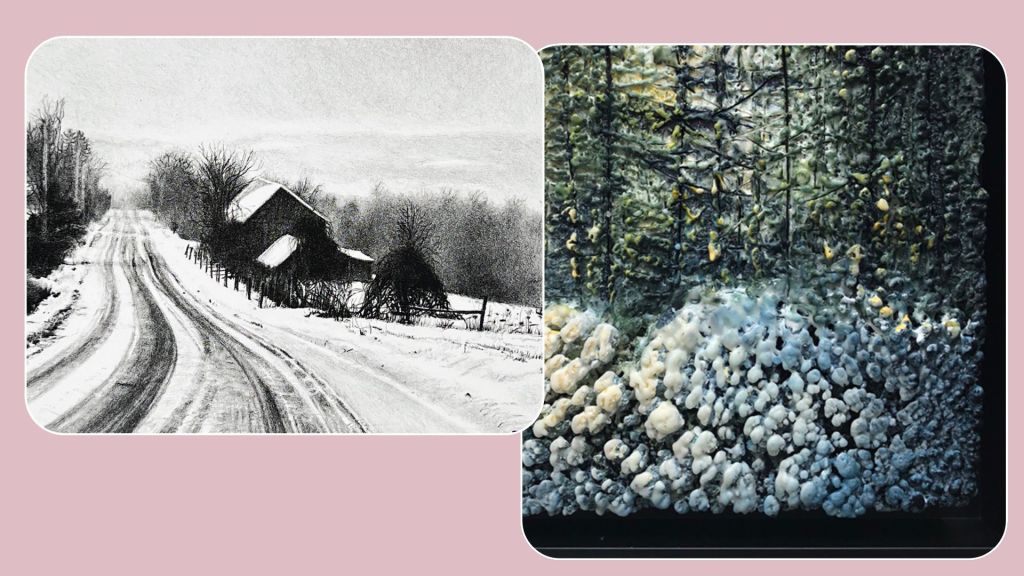
In the first demonstration (1–2:30 p.m.), artist Amy Silberkleit will share with you the worlds of lithography. Stone lithography is the process of drawing on a prepared limestone block with a grease pencil (or brush), then using ink that adheres to the drawing to transfer that image to paper when run through a press. The drawings are made with a sharpened lithographic crayon on a prepared limestone block. The fine, even grain makes stone the perfect medium for highly detailed drawings. This texture allows the artist to produce a wide range of distinctly different tones. The stones are reused: after an edition is printed, the image is ground off and the stone is ready for a new drawing. Stone lithography was invented around 1796 in Germany as an economical method for printing scripts. Based on the chemical principle that grease and water repel each other, it uses porous limestone to hold a drawn image, allowing for numerous high-quality reproductions. Amy will give a print demonstration, discussing lithography and how it differs from other printmaking techniques. She will demonstrate her technique drawing on a stone, then preparing it for printing. Using her portable press, she will print prepared stones on a variety of papers, providing explanations as she works. A stone will be available for visitors to draw on.
In the second demonstration (3–4:30), Regina Quinn will focus on encaustic, an ancient painting method. Encaustic painting originated in Ancient Greece as far back as the 5th century B.C., developed from the practical use of heated beeswax and resin to caulk and waterproof ship hulls. The technique, which means "to burn in" from the Greek "enkaustikos," evolved into a decorative art form for painting murals, sculptures, and, most famously, the mummy portraits in Egypt.
Today, it is still using heated beeswax mixed with resin and pigment. During the demo, participants will look at how the wax is melted, applied in layers, and fused with heat to create richly textured and luminous surfaces.
Together, these two demos highlight very different approaches to mark-making and material — one rooted in printmaking chemistry and the other in sculptural, wax-based painting.




 Check the Weather
