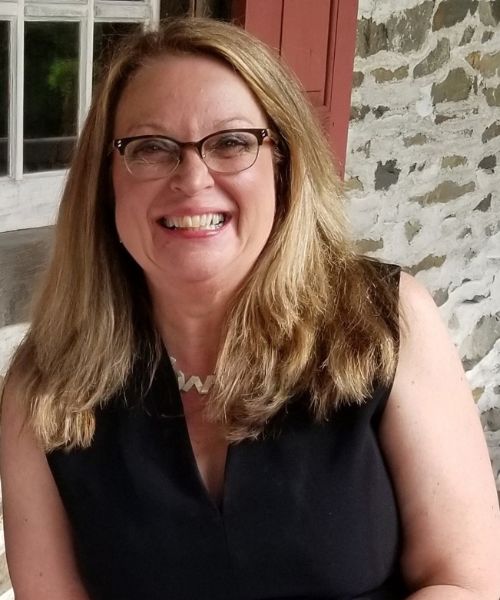
The Mary Kay Vrba Spirit Award honors an individual who embodies the qualities Mary Kay Vrba, past President & CEO of Dutchess Tourism, represents including selflessness, service, inclusiveness and leadership. This year's honoree is Elaine Hayes, the Executive Director at Mount Gulian Historic Site in Beacon.
Join Destination Dutchess in celebrating all the honorees at the 13th-annual Tourism Awards of Distinction on Tuesday, Nov. 10, 2026, at The Henry A. Wallace Center at the Franklin D. Roosevelt Presidential Library and Home in Hyde Park. Enjoy a delicious and locally sourced breakfast buffet catered by Simply Gourmet and featuring Soukup Farms maple syrup as you celebrate this year's winners. Read more about the event and purchase tickets here.
Mount Gulian is a special place. There are several thousand years' worth of history documented there, dating back long before the Verplanck family built its homestead there in 1730, and some of the residents of that homestead through the years played vital roles in significant events in American history.
Ms. Hayes has served as the Mount Gulian's Executive Director since 1992 — a remarkable 34 years — and in that time, she has worked diligently to share the amazing stories of these people. Like patriot General Friedrich Von Steuben, who served in George Washington's Continental Army during the Revolutionary War, made his headquarters at Mount Gulian in 1782-83, and helped form America’s first veterans’ fraternal organization — the Society of the Cincinnati — at Mount Gulian at the end of the war. And like James F. Brown, an African American man who was born into slavery in Maryland in the late 1700s, escaped to freedom in New York, was hired by the Verplanck family and worked as a free man as Mount Gulian’s master gardener, coachman, general laborer and most trusted property manager for about the next 40 years; excerpts from his journal, one of very few such accounts of life experienced by a Black person anywhere in America at that time, are available at Mount Gulian. And of Robert Newlin Verplanck, who was born at Mount Gulian and, after graduating from Harvard at age 20, reported to the Union Army during the U.S. Civil War; he was trained to be a volunteer officer in the newly formed United States Colored Troops, leading his African American troops into battle against the Confederates in Virginia.
Tours of Mount Gulian, including its 18th-century Dutch barn and heritage garden, are held seasonally.
Every day, I am inspired by the amazing history that actually occurred at Mount Gulian, as well as the people who visit the site and seek to learn about the people and events associated with the site, which is a microcosm of American history.
When I walk the grounds overlooking the Hudson, I think about the Native American people who lived here for over 10,000 years, and the many folks who lived and worked here over the centuries. People such as the Verplancks, who built Mount Gulian in 1730 and lived here until 1931. I would have liked to have known Mary Anna Verplanck, who as a precocious 13 year old designed the garden in the early 1800s, who never married but managed the prosperous estate at a time few women controlled property. And there’s Patriot General von Steuben, who came from Prussia, served as the Continental Army’s Inspector General, and was headquartered here. Not many people know of him before visiting the site, but after our tour they realize his many contributions to America’s independence from Britain. And of course, there’s James F. Brown, the enslaved man who escaped from Maryland, who somehow made his way up to New York City, met Daniel Crommelin Verplanck who manumitted him, and became a trusted employee here. James became the estate’s gardener and wrote a 40-year journal of his work and life. I often think — what would have happened to him if he had not met Verplanck? Would he have been sent back to Maryland as a slave?
As for the people today who inspire me, I remember the little girl who attended our History Summer Camp. On the last day of camp I asked her “So, what did you learn?” And she answered, “I learned that history is not just about dead people!” I was amazed! I thought it was brilliant! Of course that’s what kids would think: History’s irrelevant, not important. From that day forward, Mount Gulian’s staff has worked to show youngsters and adults, through our engaging school programs, tours, exhibits and special events, that history is indeed applicable to their own experiences.
And as the author Pearl S. Buck wrote, “If you want to understand today, you have to search yesterday.”
I hope travel in Dutchess County will continue to thrive and that tourists and residents will visit the smaller historic sites and historical societies the County has to offer. These institutions have remarkable items in their collections, knowledgeable staff, and wonderful stories for visitors to hear.
Making people feel comfortable and welcomed is critical if they are to have a positive experience. Mount Gulian’s mission is to educate our visitors. Offering a warm atmosphere that’s non-confrontational, respectful, “feels like home,” really helps the learning experience.
Working in the historic site sector of tourism requires strong communication skills. Speaking slowly and clearly, engaging visitors, looking folks in the eye, and making visitors feel welcome are key. And, no two visitors are the same, so staff adaptability to the moment is important. Docents shouldn’t just read from a script. For example, we’ll have visitors who like to tell our tour guides everything they know about the Revolutionary War, while other visitors are very quiet and may ask questions at the end of the tour, and others who are more difficult to engage. Asking visitors where they are from and what their interest in history is, also helps to engage them in a more meaningful experience.